

News
14 March – the International Day of Mathematics
The International Day of Mathematics (IDM) is a worldwide celebration. Each year on March 14 all countries are invited to participate through activities for both students and the general public in schools, museums, libraries and other spaces.
March 14 was chosen as the date for the IDM because it was already celebrated in many countries as Pi Day, based on the fact that some countries write it as 3/14 and the mathematical constant Pi is approximately 3.14. The IDM celebration expands Pi Day to include the whole spectrum of mathematics.
Every year IDM announces a new theme to flavour the celebration, spark creativity and bring light to connections between mathematics and all sorts of fields, concepts and ideas.
The chosen theme for 2021 is Mathematics for a Better World.
The Mathematics for a Better World Poster Challenge generated 2100 proposals, see the gallery on https://www.idm314.org/2021-poster-challenge-gallery.html.
In view of the pandemic, many celebrations will take place online or be limited to classrooms. Watch the 2021 Global Online Celebration on https://www.idm314.org/launch-2021.html.
The celebration will start as March 14 begins in Oceania and end 48 hours later at the end of March 14. It will consist of liveblogging pictures and videos from IDM events worldwide, posters, announcements and more. Posting can be done on Facebook, Twitter, and Instagram, using the hashtag #idm314.
The main event will be a series of short online talks for a general audience on mathematics and how it can make the world better. There will be three sessions in three different languages: English, French, and Spanish. The talks will be streamed live through the IDM websitе completely free and without any need to sign up. It will take place from 14:00 UTC to 18:05 UTC.
The program of the main event is available here.
The International Day of Mathematics project is led by the International Mathematical Union with the support of numerous international and regional organizations from all over the world. It was proclaimed by UNESCO on the 40th session of the General Conference, November 26, 2019.
Postdoc position for the Categorical Kaehler Geometry and Applications Project
 The Institute of Mathematics and Informatics at the Bulgarian Academy of Sciences offers a 6-month Postdoc position in Sofia, Bulgaria, with a possibility for extension in the next two years. The position is a part of the project ”Categorical Kaehler Geometry and Applications” (CKGA), funded by the National Science Fund of Bulgaria, National Scientific Program VIHREN.
For more information, follow the link: https://euraxess.ec.europa.eu/jobs/597493
Fields medalist Terence Tao will give a lecture on his proof of Sendov’s conjecture
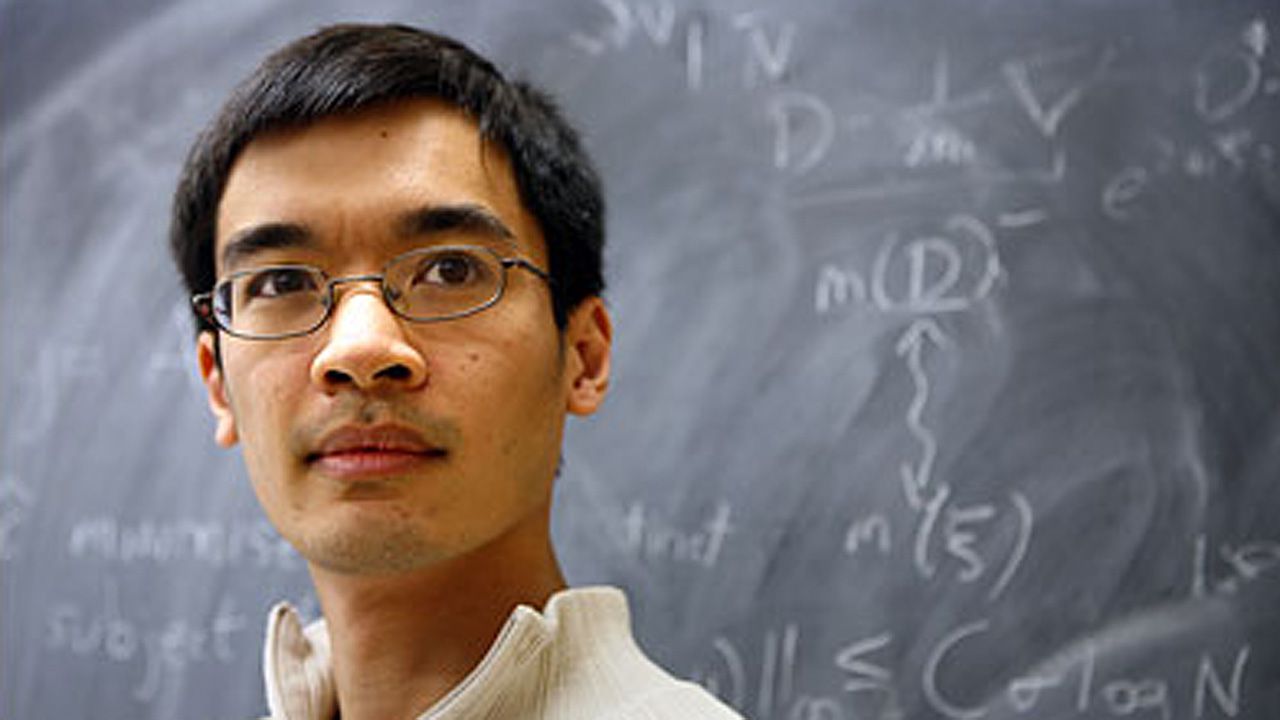
Terence Tao, Photo credit: www.nytimes.com
On January 26, 2021, prof. Terence Tao, University of California, Los Angeles (UCLA), will deliver a colloquium talk on Sendov’s conjecture organized by the International Center for Mathematical Sciences (ICMS-Sofia) at the Institute of Mathematics and Informatics – BAS, the Institute of Mathematical Sciences of the Americas at the University of Miami (IMSA) and the Union of Bulgarian Mathematicians (UBM).
Terence Tao is an Australian-American mathematician, born in 1975. He is a professor in the Department of Mathematics at the University of California. He works in a number of mathematical areas, but primarily in harmonic analysis, PDE, geometric combinatorics, arithmetic combinatorics, analytic number theory, compressed sensing, and algebraic combinatorics. Tao is an editor or an associate editor at several mathematical journals. He is the author and co-author of over three hundred scientific publications.
Terence Tao was awarded the Fields Medal in 2006. In 2012, he won the Crafoord Prize of the Royal Swedish Academy of Sciences, which is
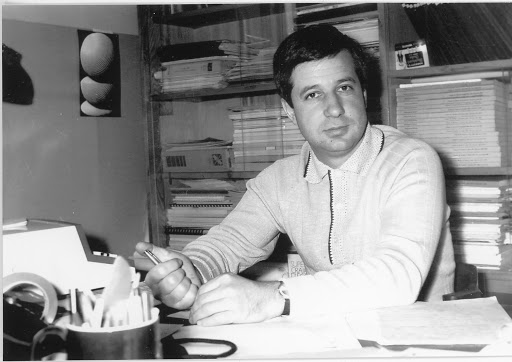
Blagovest Sendov, Photo credit: mmib.math.bas.bg
considered equal to the Nobel Prize. In 2014 Terence Tao became a laureate of The Breakthrough Prize in Mathematics “for numerous breakthrough contributions to harmonic analysis, combinatorics, partial differential equations and analytic number theory”.
In December 2020, Prof. Tao managed to make a major breakthrough in the proof of Sendov’s conjecture about the distribution of the critical points of a complex polynomial, proving this conjecture for sufficiently high degree polynomials (https://arxiv.org/abs/2012.04125).
His lecture is entitled Sendov’s conjecture for sufficiently high degree polynomials. The event will be held online through the Zoom platform, starting at 18:15 EET on January 26, 2021.
This event is organized in memory of Academician Blagovest Sendov who passed away one year ago.
More about Terence Tao could be found on his blog.
Find more information about his talk on https://icms.bg/.
Join Zoom Meeting: https://zoom.us/j/96005943833?pwd=cG9aalBjcTVZVy9LSHNLeVovalpIZz09
The Third World Logic Day – January 14, 2021
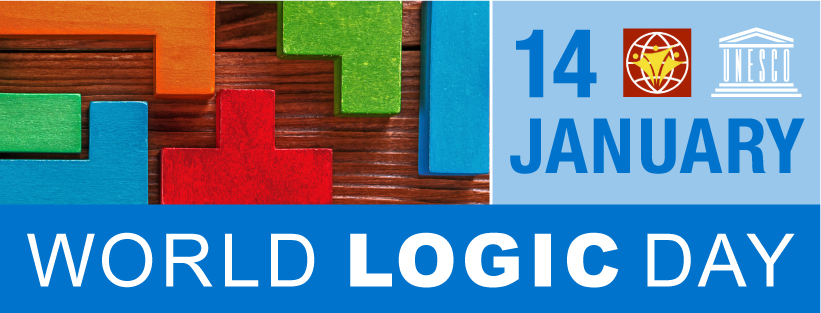
The Third World Logic Day will be celebrated all over the world on January 14, 2021, with a series of scientific events. The World Logic Day was organized for the first time on January 14, 2019. The date of January 14 is related to two of the most prominent logicians of the twentieth century. January 14, 1978, is the date of death of Kurt Gödel and January 14, 1901, is the date of birth of Alfred Tarski.
Based on the success of this First World Logic Day, on 26 November 2019, UNESCO proclaimed 14 January to be World Logic Day and included it in its list of International Days. The event is very popular worldwide. Last year there were 60 scientific events in 35 countries and this year 45 events in 27 countries have already been registered.
To mark the day the logicians from the Bulgarian Academy of Sciences and from Sofia University “St. Kliment Ohridski” have decided to organize a joint event on the occasion of the World Logic Day 2021. The event is included in the official program of the Third World Logic Day.
A joint meeting of the Seminar of Algebra and Logic of the Institute of Mathematics and Informatics at BAS, the Seminar of Mathematical Logic of the Faculty of Mathematics and Informatics of Sofia University “St. Kliment Ohridski”, and the Seminar of Logic of the Institute of Philosophy and Sociology at BAS has been organized.
The event will take place via Zoom on January 15, 2021 (Friday) from 9:30 am local time (UTC+2). Everybody is cordially invited to attend by following the link:
https://us02web.zoom.us/j/84006543603?pwd=UjVMK0dFaFJwN2t6L1pPR2FhT2o0dz09
Time: Jan 15, 2021, 09:30 Sofia
Meeting ID: 840 0654 3603
Passcode: 116245
The programme is available here.
There will be 10 talks from the three scientific institutions. Since many scientific events are planned worldwide for January 14, the organizers of the joint seminar have decided to schedule the event for January 15, 2021.
Official guests of the joint seminar, who will participate at the opening ceremony, are:
- Her Excellency Maria Edileuza Fontenele Reis, Ambassador of the Federative Republic of Brasil to the Republic of Bulgaria and the Republic of North Macedonia. As a former Ambassador of the Federative Republic of Brazil at UNESCO, she succeeded to include the World Logic Day in the UNESCO Calendar of International Days.
- Karina Angelieva, Deputy Minister of Education and Science.
- Acad. Julian Revalski, President of the Bulgarian Academy of Sciences.
- Prof Anastas Gerdjikov, Rector of Sofia University “St. Kliment Ohridski”.
An official guest for the afternoon session of the event will be Prof. Jean-Yves Béziau, Creator of the World Logic Day and Editor-in-Chief of Logica Universalis.
The home page of the official World Welcome Celebration of January 14, 2021, is
http://www.logica-universalis.org/wld3
The page contains also a pre-recorded video address by Her Excellency Maria Edileuza Fontenele Reis to the worldwide community
that everybody can watch on
http://www.logica-universalis.org/wld3-brazilian-unesco-ambassador
Two of our colleagues, Alexandra Soskova and Valentin Goranko, are among the official guests of the ceremony.
Department of Algebra and Logic, IMI-BAS
http://www.math.bas.bg/algebra/seminarAiL/
Merry Christmas and Happy New Year!
The Institute of Mathematics and Informatics at the
Bulgarian Academy of Sciences
wishes you
Merry Christmas and
Happy and successful New Year!
Administration
IMI PRIZE
IMI MATHEMATICS PRIZE
Please donate
BIC: UNCRBGSF
IBAN: BG32UNCR76303100117336
Address: Institute of Mathematics and Informatics,
Acad. G. Bonchev Str., Block 8,
1113 Sofia
VAT No.: BG000665249



Useful Links